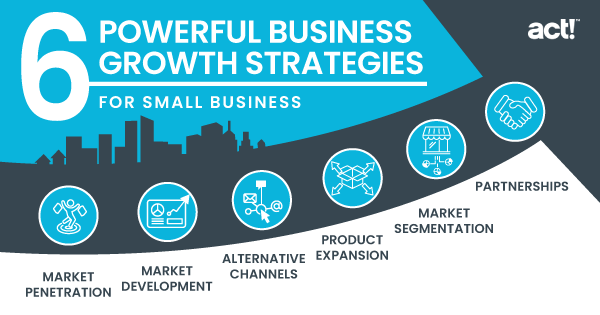
As a business owner, you have several avenues for growth. Business growth can be broken down into the following categories:
1. Organic
With organic growth, a company expands through its own operations utilzing its own internal resources. This is in contrast to having to seek out external resources to facilitate growth.
An example of organic growth is making production more efficient so you can produce more within a shorter time frame, which leads to increased sales. A perk of utilizing organic growth is that it relies on self-sufficiency and avoids taking on debt. Additionally, the increased revenue created from organic growth can help fund more strategic growth methods later on. We’ll explain that below.
2. Strategic
Strategic growth involves developing initiatives that will help your business grow long term. An example of strategic growth could be coming up with a new product or developing a market strategy to target a new audience.
Unlike organic growth, these initiatives often require a significant amount of resources and funding. Businesses often take an organic approach first in hopes that their efforts will generate enough capital to invest in future strategic growth initiatives.
3. Internal
Internal growth strategy seeks to optimize internal business processes to increase revenue. Similar to organic growth, this strategy relies on companies using their own internal resources. Internal growth strategy is all about using existing resources in the most purposeful way possible.
An example of internal growth could be cutting wasteful spending and running a leaner operation by automating some of its functions instead of hiring more employees. Internal growth can be more challenging because it forces companies to look at how their processes can be improved and made more efficient rather than focusing on external factors like entering new markets to facilitate growth.
4. Mergers, Partnerships, Acquisitions
Although riskier than the other growth types, mergers, partnerships, and acquisitions can come with high rewards. There’s strength in numbers and a well-executed merger, partnership, or acquisition can help your business break into a new market, expand your customer base, or increase your products and services on offer.